12/12/2025
The Satiety Scale: Why some foods fill you up while others don't
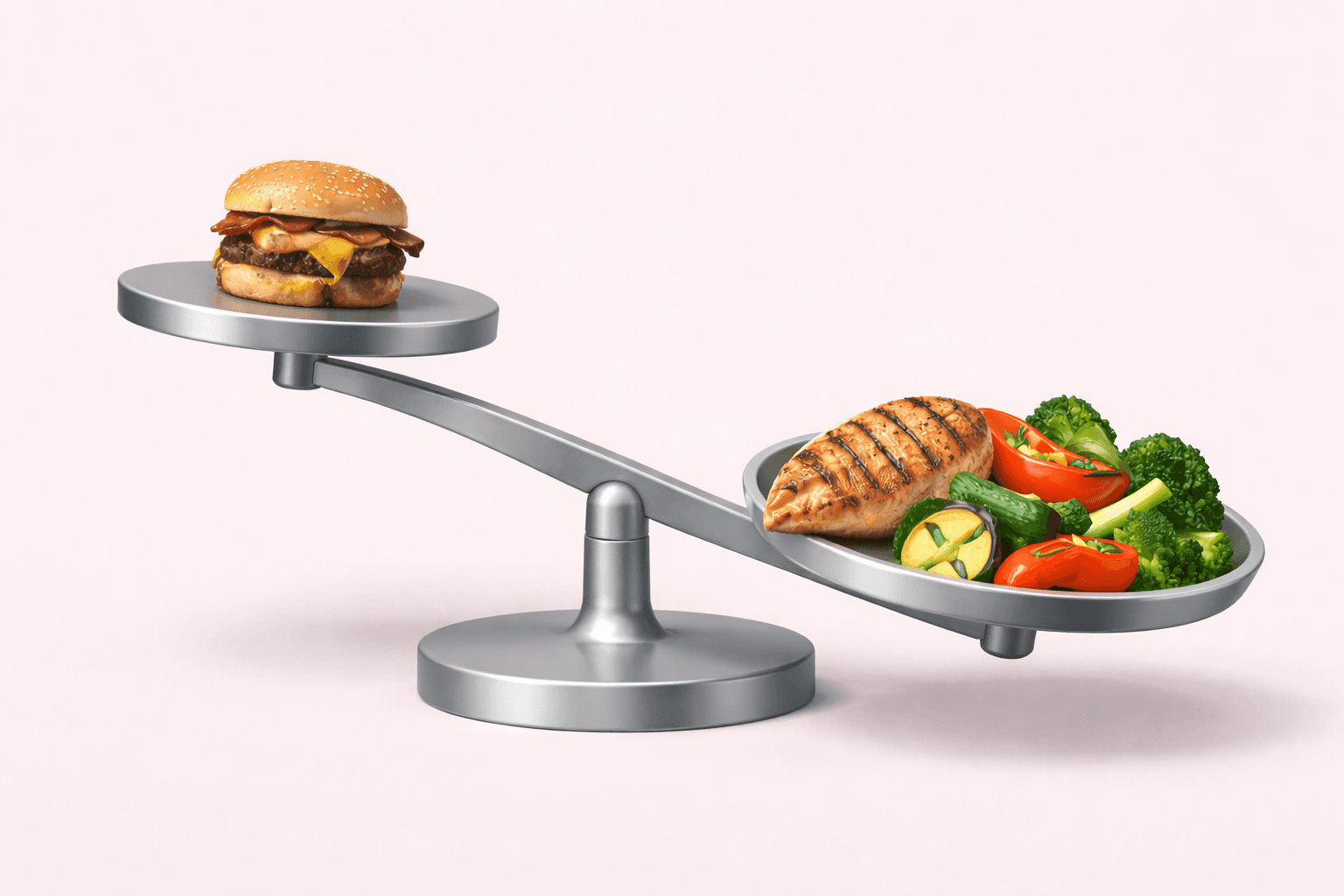
The Satiety Scale: Why some foods fill you up while others don’t
When we think of food individually, we can imagine how different foods make us feel more full or less full when compared to one another. For example, if we have equal energy served to us in the form of pastries versus oats, we can imagine that the serving of oats is going to have much more volume, and make us feel fuller both quicker and for longer.¹
So what about all of the other foods? In our The Nutrients That Drive Satiety blog, we discuss how foods contain different nutrients, and these nutrients play a role in influencing how satiated we feel after eating.² Research has found that high fibre, high protein foods that have a lower energy density, are more satiating when compared to energy dense foods that are high in saturated fat.²
Think of satiety from foods as a scale from low fullness to high fullness. Foods can be ranked for satiety roughly this way, which also reflects the Australian Dietary Guidelines of enjoying a wide variety of nutritious foods (high fullness), whilst limiting intake of discretionary foods (low fullness):³
Low-satiety foods: Usually energy dense, soft in texture, and offering minimal fibre or protein.³ These would be considered the 'discretionary foods' in the Australian Guide to Healthy Eating, examples include:³
Croissants and pastries
Chips and fries
Chocolates, sweets, and biscuits
Medium-satiety foods: Nutritious whole foods that, when part of a balanced meal with protein and fibre, help you to feel fuller for longer:¹,²
Rice or pasta
Cheese or eggs
Muesli
High-satiety foods: Either high in protein, high in fibre, or both! These foods are considered high satiety, especially when part of a balanced meal, ideal for long-lasting fullness:⁴
Chicken breast
Legumes and beans
Broccolli, brussel sprouts, leafy greens
Oats and wholegrains
Why This Matters for Everyday Eating
Imagine two meals:
Meal A: Croissant and a black coffee
Meal B: Eggs, spinach, and avocado on wholegrain toast, and a coffee with milk
These meals are similar in the energy (calories) they provide, but one is balanced, has a source of protein, fibre, wholegrain carbohydrates and healthy fats, which will leave us feeling satiated from eating.⁴ Creating meals that are balanced with each macronutrient, will help us to feel satiety and satisfaction from our meals.⁴
How FoodSee Helps Visualise the Satiety Scale
Nutrition is not about overhauling your diet, but taking small sustainable steps through understanding food and making daily improvements. This is not to say avoid all pastries and only eat oats, but when we better understand foods, and see the meal as a whole, we can make daily changes to support our goals while still including the foods we love.
FoodSee calculates the satiety estimate of your meal instantly from the photo you take. This means you can easily identify high satiety foods, and learn how to adjust ingredients to create a balanced meal, helping you to feel full and energised from eating.
Sources
Holt SHA, Petocz P, Farmakalidis E. A Satiety Index of common foods. European journal of clinical nutrition. 1995;49:675-90. http://www.researchgate.net/publication/15701207_A_satiety_Index_of_common_foods
Chambers L, McCrickerd K, Yeomans MR. Optimising foods for satiety. Trends in Food Science & Technology. 2015;41(2):149-60. https://doi.org/10.1016/j.tifs.2014.10.007
National Health and Medical Research Council. Eat for Health Educator Guide. Canberra; 2013. https://www.eatforhealth.gov.au/sites/default/files/files/the_guidelines/n55b_eat_for_health_educators_guide.pdf
Harvard T.H. Chan School of Public Health. Healthy Eating Plate 2026. http://nutritionsource.hsph.harvard.edu/healthy-eating-plate/.