12/12/2025
The Nutrients That Drive Satiety
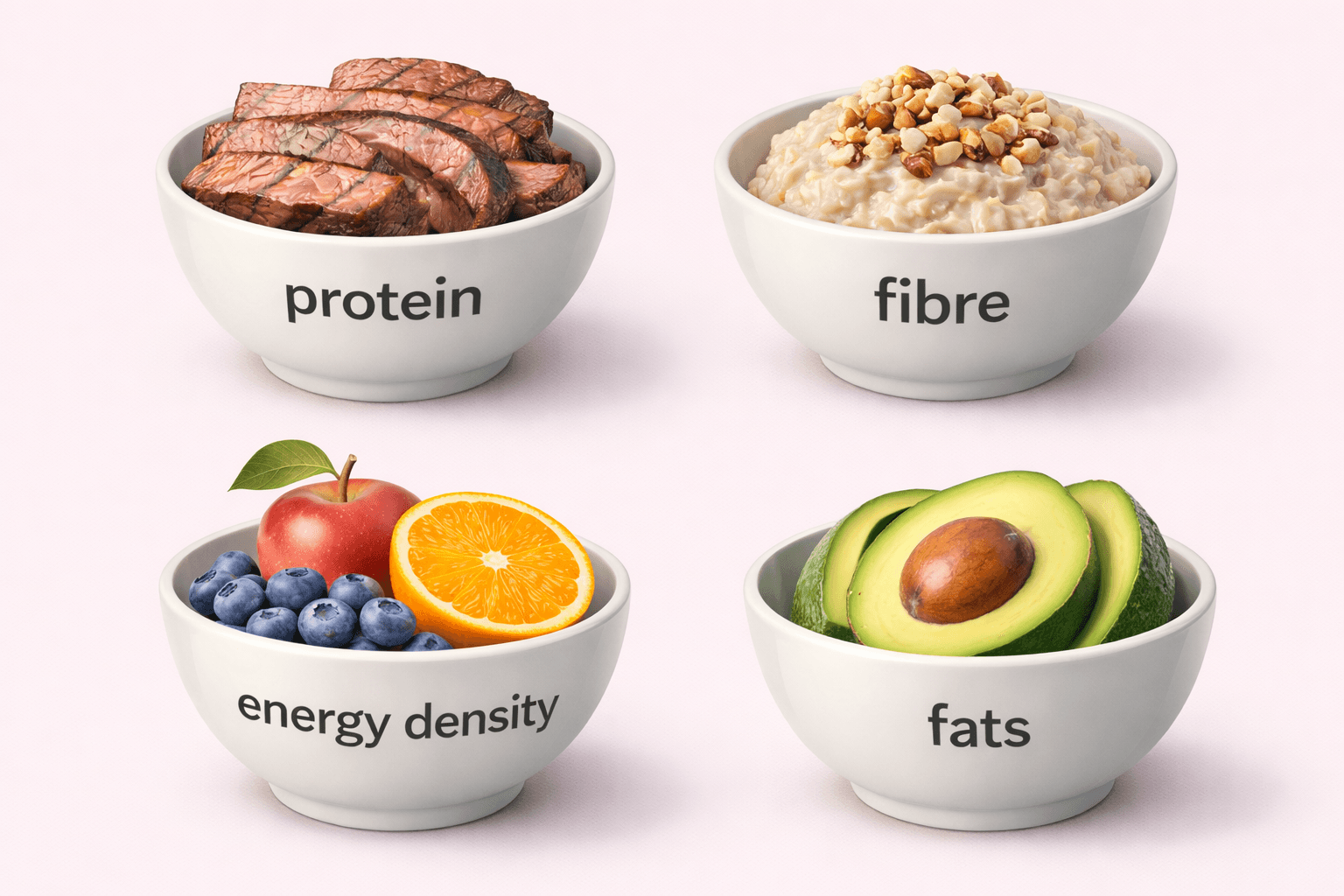
Understanding these nutrients helps you build meals that taste good and support lasting fullness. Even small adjustments can have a dramatic effect on appetite and energy throughout the day.¹ We've mentioned balanced plate, again and again, so here are the key nutrients required, and how they work to influence satiety:²
Protein: The Satiety Powerhouse
Research has found protein to be the most filling macronutrient per calorie, one way it drives satiety is by slowing digestion, providing a steady energy release and supporting appetite throughout the day.³ High protein foods include eggs, chicken, fish, Greek yoghurt, legumes, lean meats, tofu, and tempeh.⁴
Fibre: Where whole grains come in
By stimulating signals from our gut, fibre helps to decrease hunger and increase satiety from food as we eat.¹ Alongside this, fibre slows digestion and increases the bulk of food, all while supporting a healthy gut.⁵ Whole grains are a great source of fibre, and important to include when aiming for balanced, satiating meals.⁵
Did you know the daily goal for fibre is:⁵
25g for women
30g for men
Alongside whole grains, fibre rich foods include legumes, beans, fruit, vegetables, nuts, and seeds.⁵
Fibre rich foods often require more chewing and crunching because of skins, seeds, or stems. This act of chewing has been found to increase satiety by enhancing our sensory experience, increasing meal time, and activating our fullness signals sooner.¹
Healthy Fats: Small Amounts, Big Impact
Healthy fats play an important role in a healthy diet, but often get a bad rap because they are more energy dense when compared to protein and carbohydrates.¹ By adding a small amount of healthy fats to our plate, this helps to create a balanced meal, whilst enhancing satisfaction and enjoyment.² Healthy fats include olive oil, nuts, seeds, avocado, and fatty fish.⁴
Energy Density and the Impact on Satiety
The water content of our foods has an impact on satiety, foods that have more water are often less energy dense but have a higher volume, and this higher volume can make us feel more full.¹ For easy visualising, imagine a bowl of watermelon, very watery, high in volume, and low in energy (calories). Other examples of low energy density foods include green leafy vegetables, berries, apples, lean proteins, and whole grains.⁴ Including these foods in the diet are important, as part of a balanced plate.²
FoodSee and Nutrients
When you take a picture of your meal, FoodSee estimates the foods:
Protein content
Fibre content
Fat content
Water content
Energy density and content
With this information, it can help you understand why your meal feels filling or not, and potential changes to improve this. Balanced meals with protein, fibre, whole grains, and healthy fats, offer satiety and satisfaction.² Prioritising these nutrients can help to improve appetite, hunger, and fullness, while supporting your everyday energy levels.¹ FoodSee helps you understand the nutrition of your meal, the satiety of your foods, and where you could make changes to achieve your nutrition goals.
The estimated nutrition data generated is based on nutritional datasets, and represent a general score which may range between food products. Scores generated using Australian Food, Supplement, and Nutrient Composition Database,⁶ and the Satiety Index of Common Foods.⁷
Sources:
Garutti M, Sirico M, Noto C, Foffano L, Hopkins M, Puglisi F. Hallmarks of Appetite: A Comprehensive Review of Hunger, Appetitie, Satiation, and Satiety. Current Obesity Reports. 2025;14(1):12. https://doi.org/10.1007/s13679-024-00604-w
Harvard T.H. Chan School of Public Health. Healthy Eating Plate 2026. http://nutritionsource.hsph.harvard.edu/healthy-eating-plate/
Morell P, Fiszman S. Revisiting the role of protein-induced satiation and satiety. Food Hydrocolloids. 2017;68:199-210. https://doi.org/10.1016/j.foodhyd.2016.08.003
National Health and Medical Research Council. Eat for Health Educator Guide. Canberra; 2013. https://www.eatforhealth.gov.au/sites/default/files/files/the_guidelines/n55b_eat_for_health_educators_guide.pdf
National Health and Medical Research Council. Dietary Fibre. 2005. https://www.eatforhealth.gov.au/nutrient-reference-values/nutrients/dietary-fibre
Food Standards Australia New Zealand. AUSNUT 2023: Food Standards Australia New Zealand; 2025. https://www.foodstandards.gov.au/science-data/food-nutrient-databases/ausnut.
Holt SHA, Petocz P, Farmakalidis E. A Satiety Index of common foods. European journal of clinical nutrition. 1995;49:675-90. https://www.researchgate.net/publication/15701207_A_Satiety_Index_of_common_foods